
If you are dealing with bad permanent makeup, one thought probably keeps you up at night: "If I get laser removal, will it burn off my natural eyebrow hair or leave scars?"
When you already have damaged brows from deep microblading, the fear of making things worse is completely valid. Many clients delay fixing their eyebrows for years because they assume laser removal is too aggressive for delicate facial skin.
Here is the truth: when performed correctly using advanced technology like picosecond laser, professional removal targets only the pigment trapped in your skin—without causing scar tissue or permanent hair loss.
At Munique Brows Studio, we specialize in fixing complex permanent makeup cases. Let's look at how picosecond laser technology works and walk through a real client case of deeply implanted, turned-blue microblading.
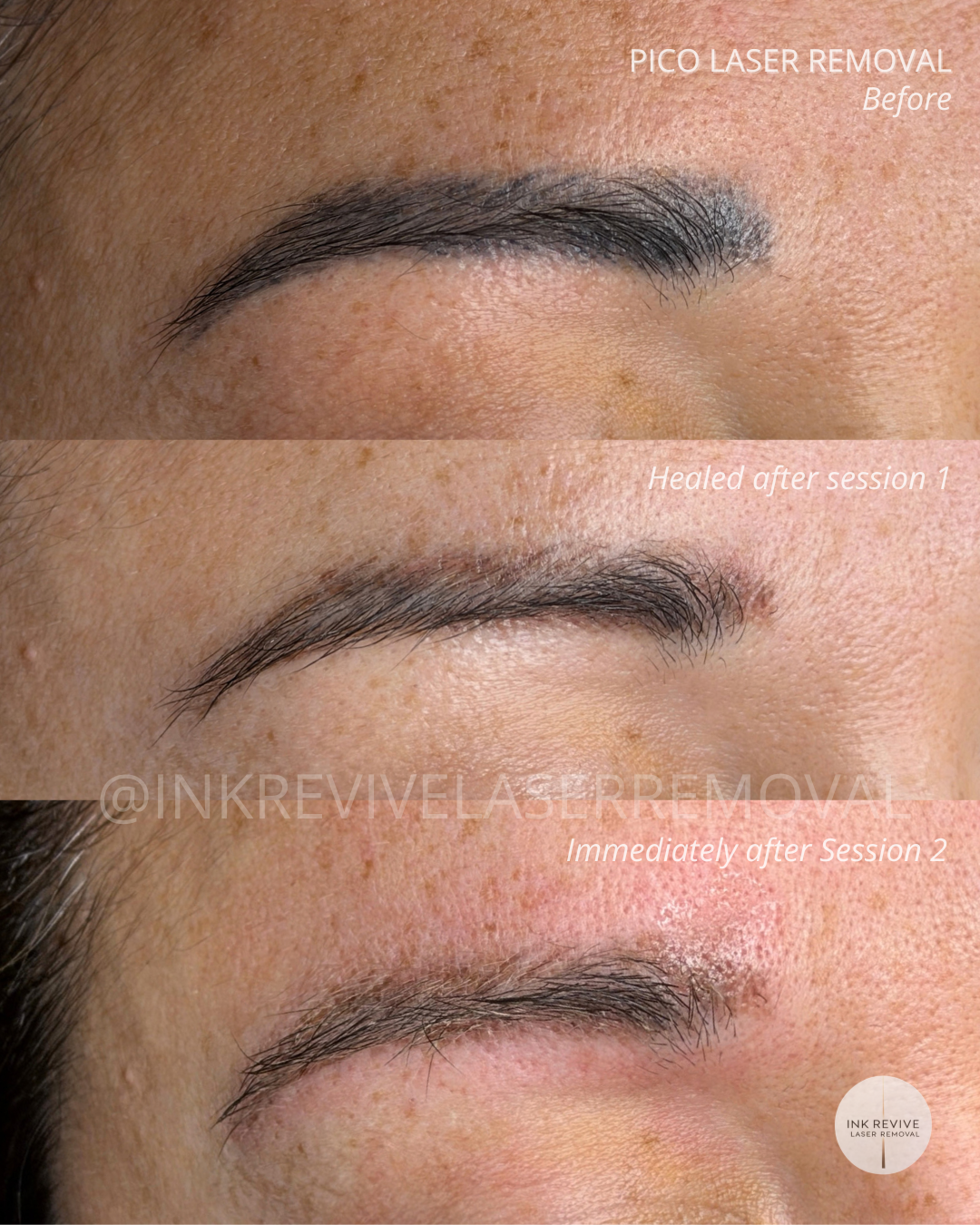
Why Picosecond Laser Protects Your Hair and Skin
Traditional Q-switched lasers rely on intense heat (photothermal energy) to blast pigment particles. This heavy heat exposure could sometimes singe brow hairs or inflame delicate tissue.
Picosecond laser technology works differently:
Photo-Acoustic Energy: Pico lasers deliver ultra-short energy pulses in trillionths of a second (picoseconds). Instead of using intense heat to burn pigment, it creates a photo-acoustic shockwave that shatters ink particles into microscopic dust.
Minimized Thermal Damage: Because the laser pulse is so fast, heat doesn't bleed into surrounding tissue or heat up hair follicles.
Preserved Natural Hair: Your hair follicles sit at a different depth and react differently than pigment particles. The laser light specifically targets the ink, leaving natural hair roots safe and intact. (Note: Hair shaft pigment may temporarily frost or lighten during a session, but normal hair growth continues unaffected.)
Real Case Study: Correcting Deeply Implanted, Blue Microblading
A recent client came into Munique Brows Studio with severe microblading damage from a previous artist:
Deep Implantation & Migration: The original blade had been pressed far too deeply into the dermis. Over time, the crisp hair strokes bled together, turned thick, and shifted into a cool, harsh blue-gray tone.
Existing Scar Tissue: Because the original cuts were too deep, the skin beneath had developed micro-scarring, trapping the heavy blue pigment even deeper.
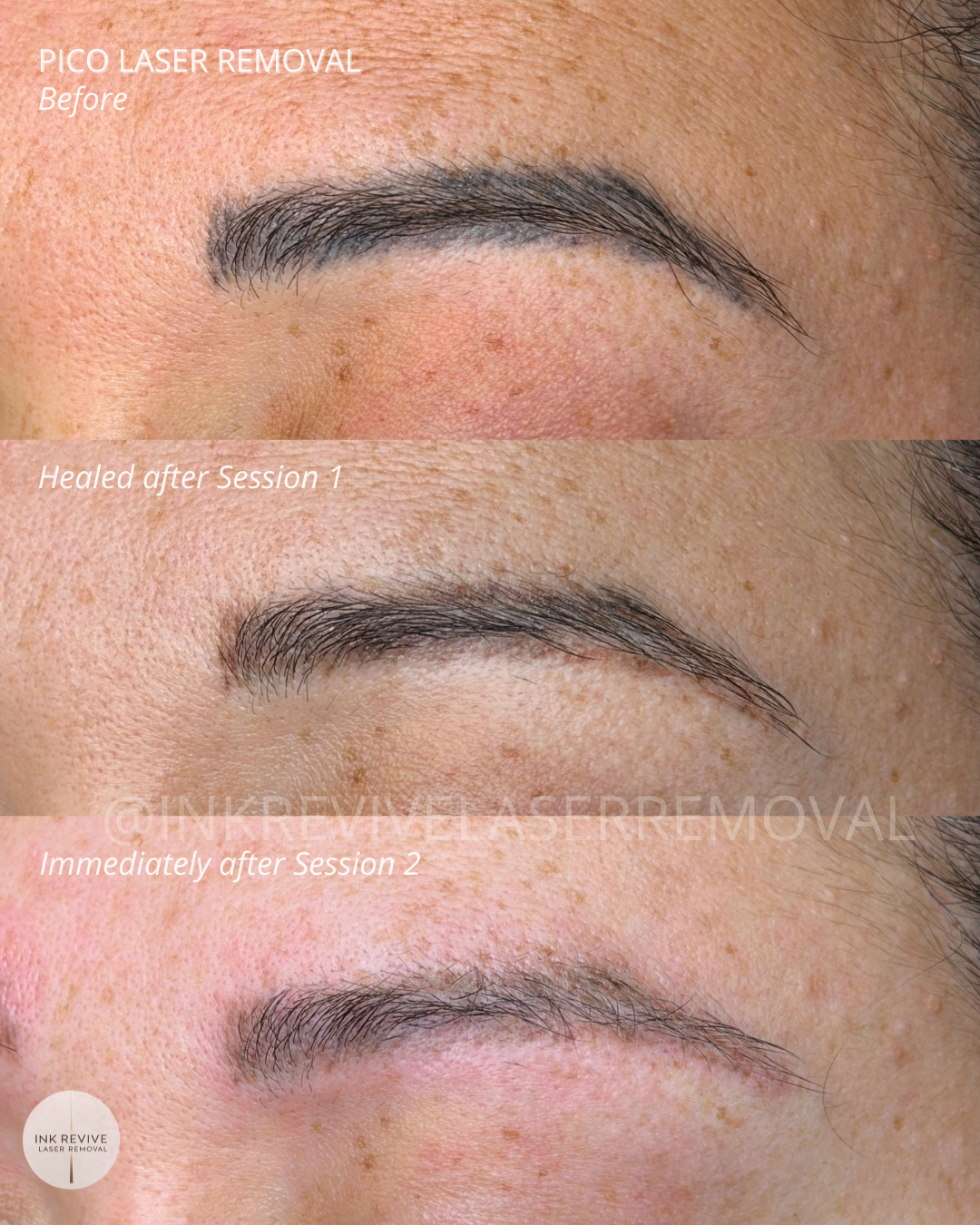
How Many Sessions Are Required?
For deeply saturated cases with micro-scarring like this, achieving 100% full clearance generally requires 3 to 6 laser sessions, spaced 4 to 6 weeks apart to allow the lymphatic system to clear out the shattered ink.
Do You Always Need Full Removal?
Not necessarily. The number of sessions you need depends entirely on your personal brow goals:
Goal A: Complete Blank Canvas — If you want totally fresh, realistic ultra-fine hair strokes or no permanent makeup at all, you will want 3 to 6 sessions to erase all traces of blue pigment.
Goal B: Cover-Up / Brow Redo — If your goal is to get fresh Combo Brows or a Powder Brow cover-up, you only need enough sessions (often 1 to 3) to lighten the blue pigment down to a faint shadow. Once light enough, a skilled artist can neutralize the remaining tone and apply fresh work over top—saving you time and money.
Safe, Professional Brow Restoration at Munique Brows Studio
If bad microblading has left you with discolored brows or scarred skin, you don't have to live with it. Advanced Pico laser techniques allow us to lighten or remove stubborn ink safely—keeping your natural hair healthy and intact every step of the way.
