
PMU Brow Cover-Up vs. Pico Laser Removal: How to Choose
If you have old permanent eyebrow makeup—whether it’s microblading, powder brows, or a traditional tattoo—you’ve likely reached a point where you want a fresh update. But as you research your options, you'll inevitably hit a crossroads: Can you just get a brow cover-up, or do you need Pico laser removal first?
Knowing which path to take saves you both time and money while protecting your skin health. Here is everything you need to know about how to decide.
The Golden Rule: The 80–90% Fading Threshold
The most critical factor in deciding between a direct cover-up and laser removal is the saturation of your existing pigment.
As a general standard, old brow pigment needs to be 80% to 90% faded before a permanent makeup artist can successfully perform a cover-up.
Why 80-90%? Skin has a limited amount of capacity to hold pigment. If your skin is still saturated with old ink, adding fresh pigment on top is like trying to paint light yellow over dark navy blue with a watercolor brush. The old color will quickly bleed through, leaving your new brows looking muddy, dark, or oversized.
Color Matters Too: If your faded brows have turned an intense cool blue, charcoal, or deep red, simply tattooing new brown hair strokes over top will not neutralize the underlying tone long-term.
Option 1: When a Brow Cover-Up Works
A cover-up (or color correction) is ideal when your old work has faded significantly and your goals align with your existing shape.
Your brows are 80%+ faded: The old shape is barely visible—just a soft, ghost-like shadow of pigment remaining.
The skin texture is healthy: There is no raised scar tissue or hard skin underneath.
You want a slightly fuller or darker shape: Cover-ups generally require making the new shape slightly thicker or darker than the original to conceal the underlying residual tone properly.
The original shape was mapped well: The old work stays strictly within the boundaries of where your ideal new brows should sit.
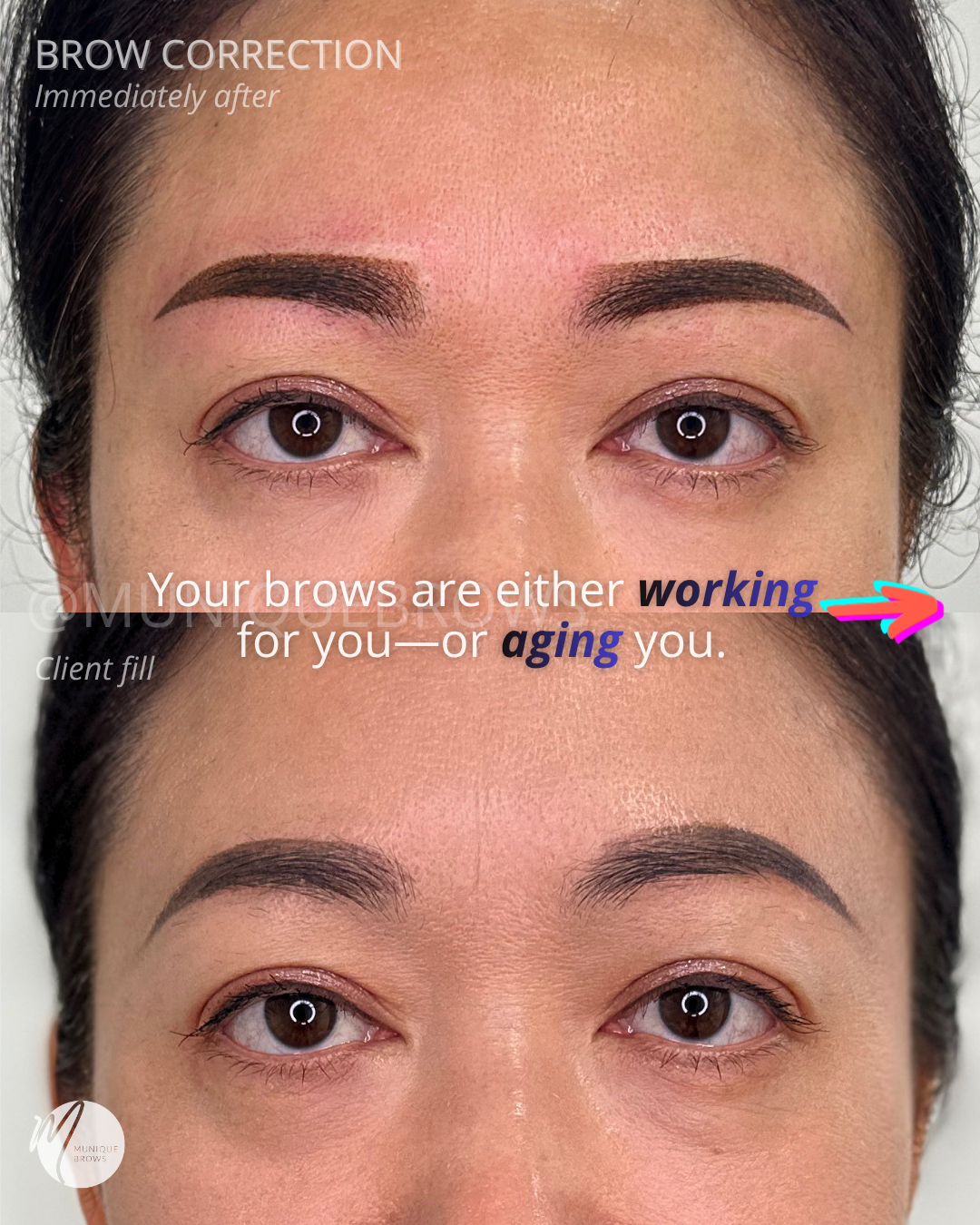
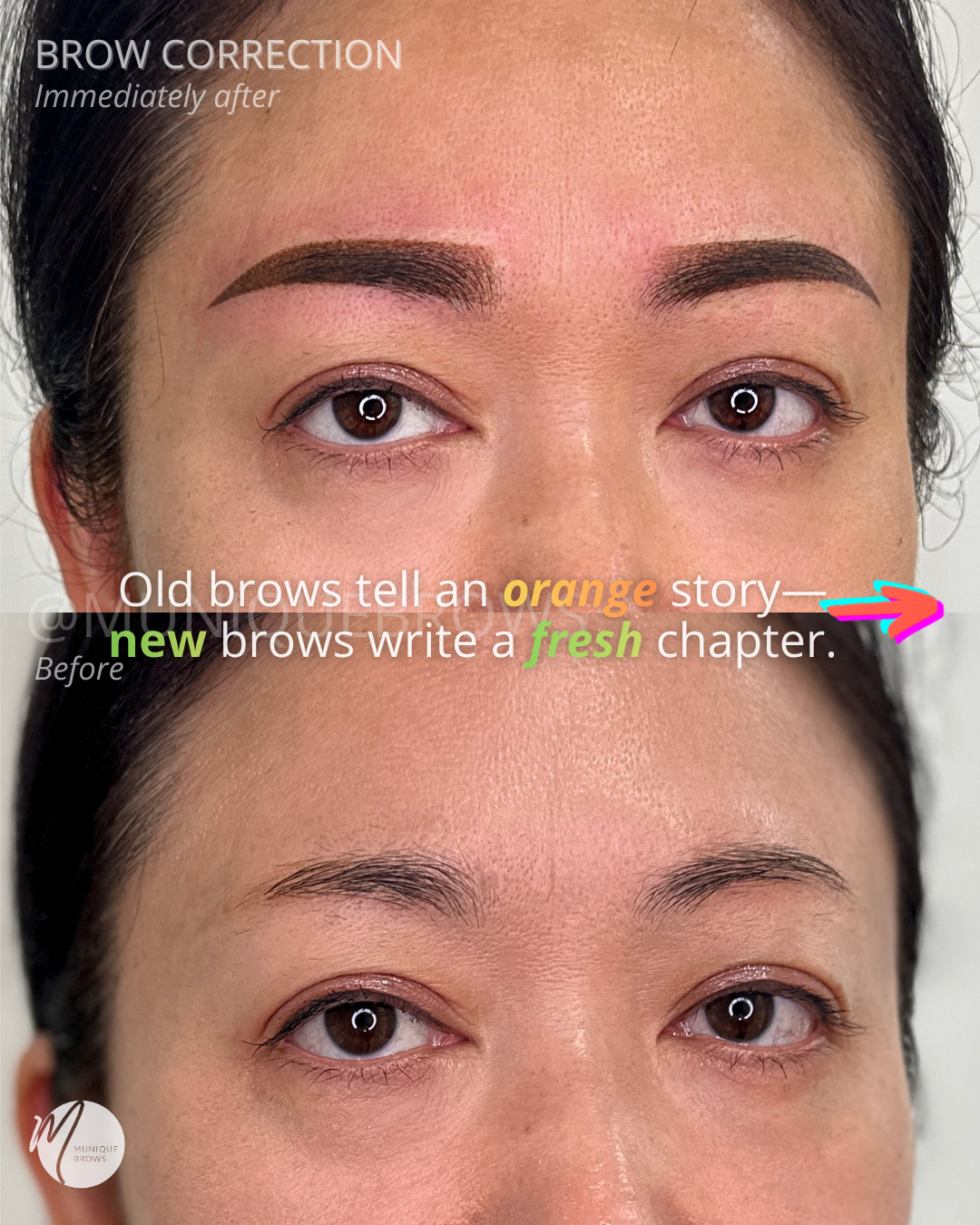
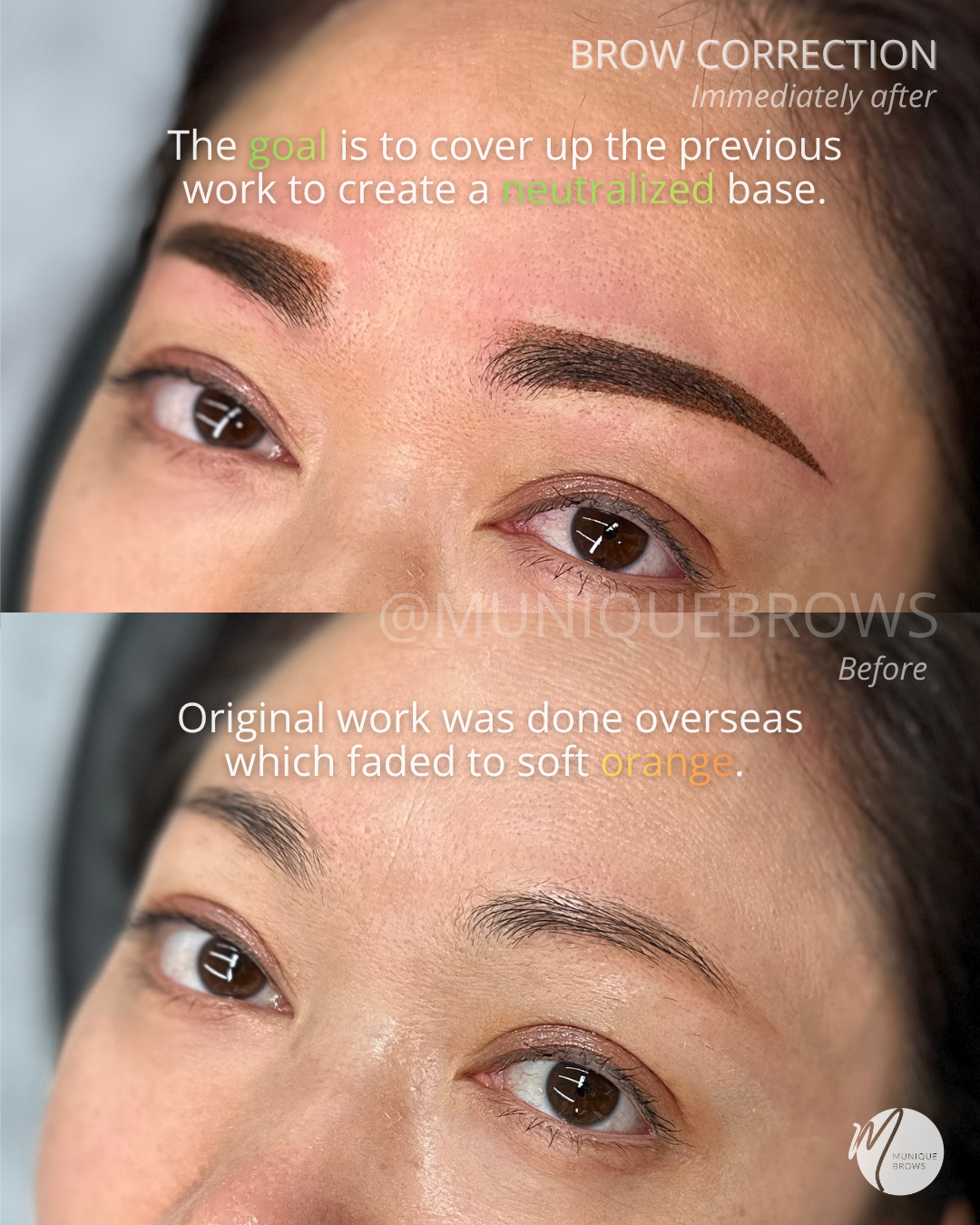
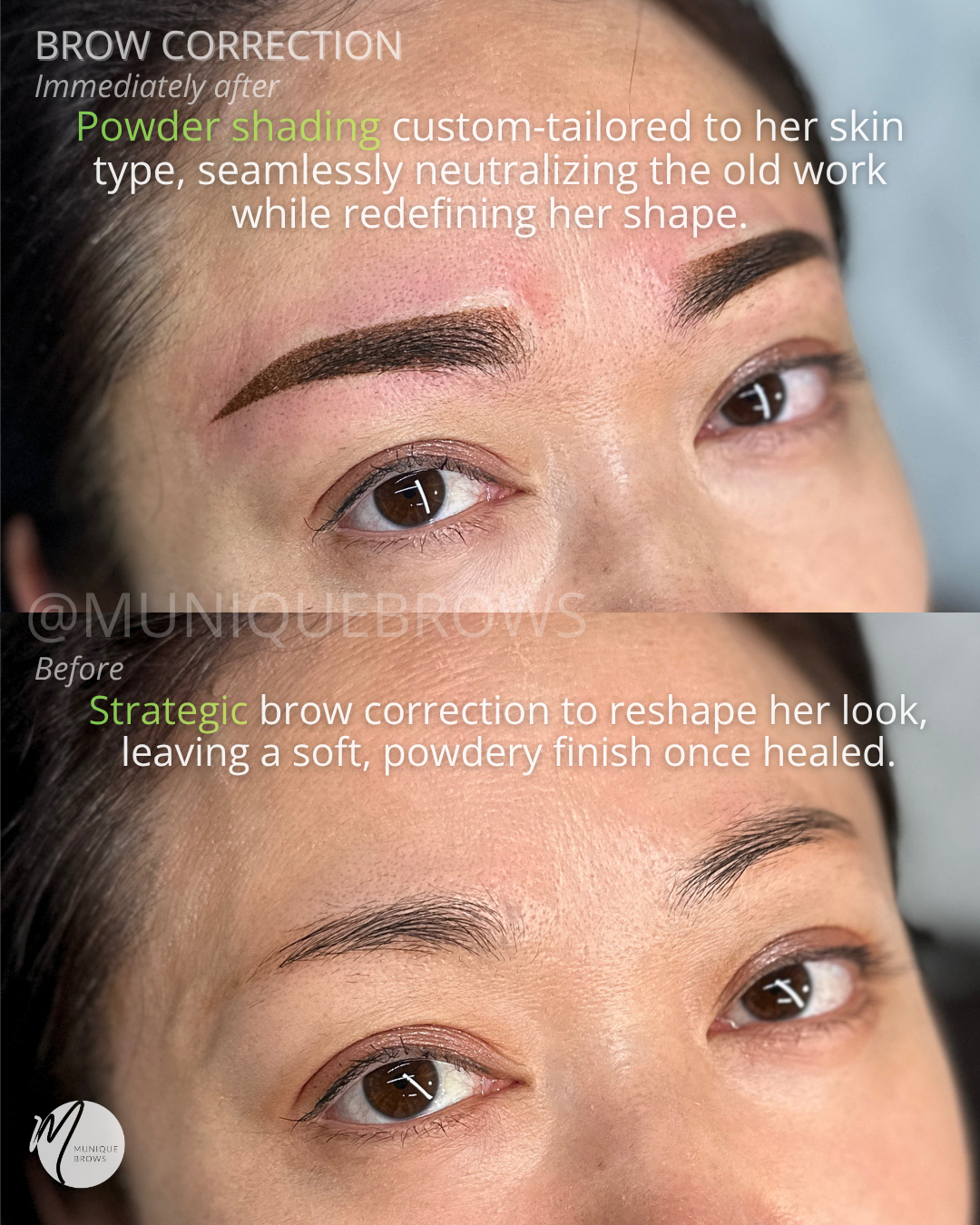
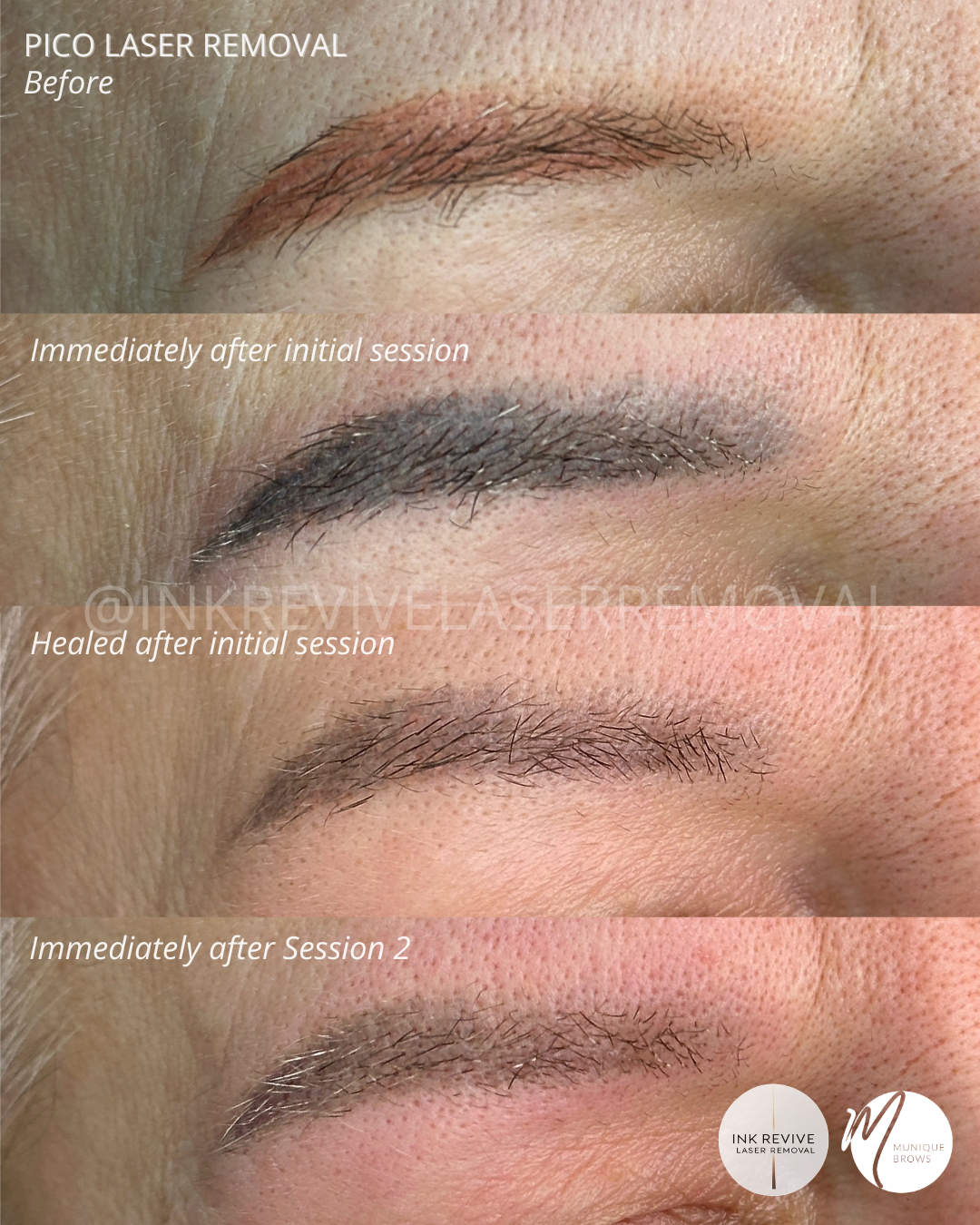
Note: Client in the gallery had her brows done overseas which faded 90% to soft orange.
Option 2: When You Need Pico Laser Removal First
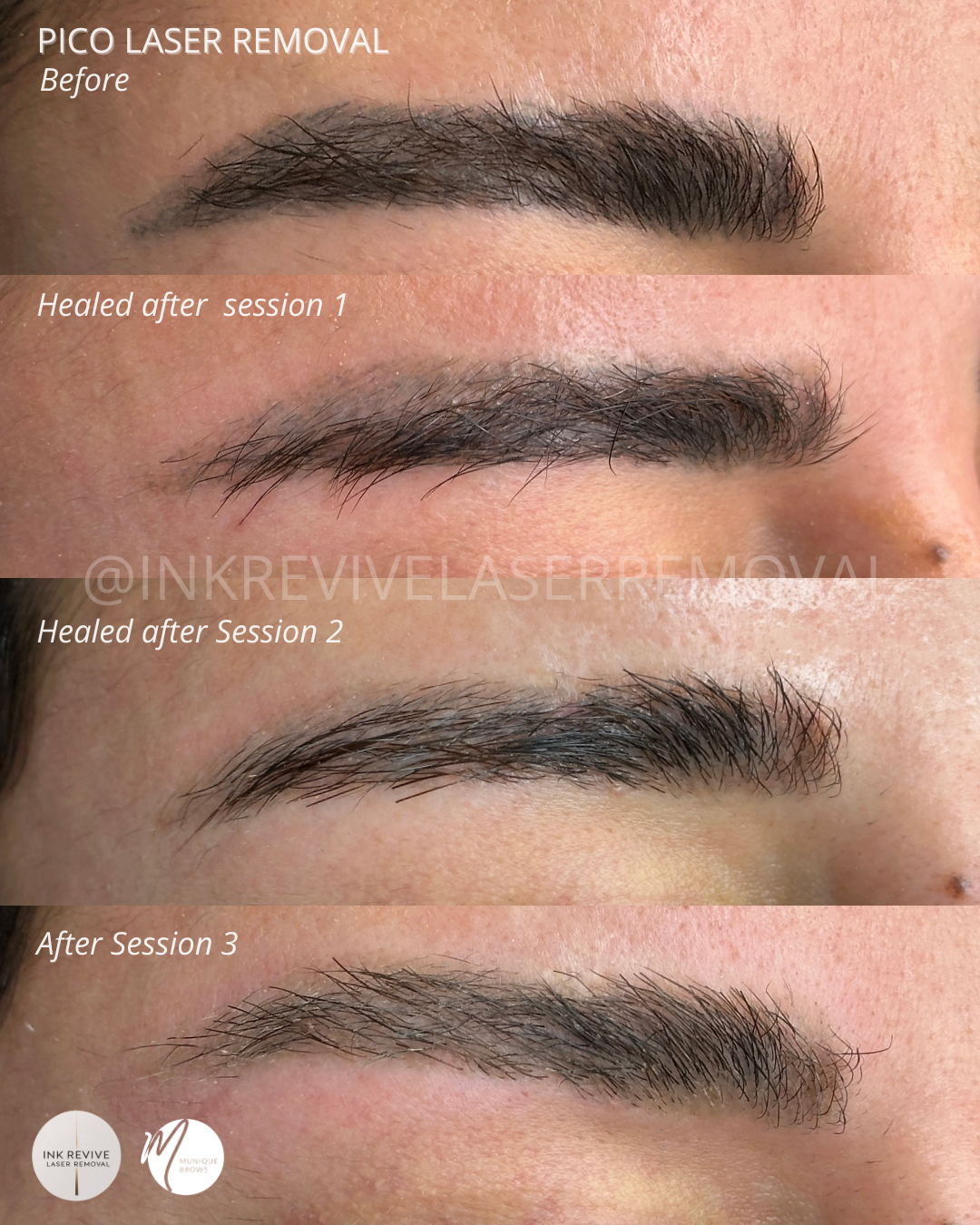
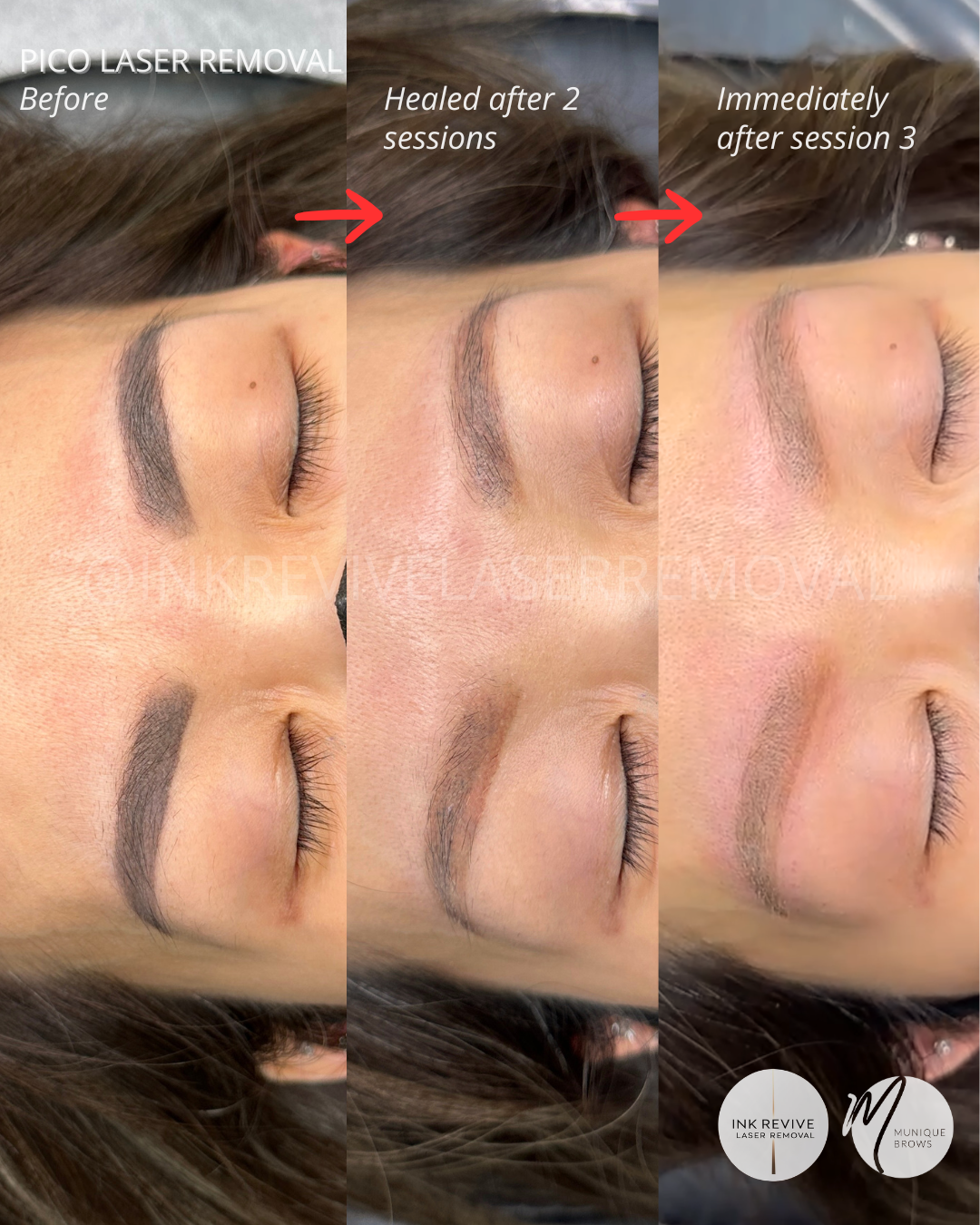
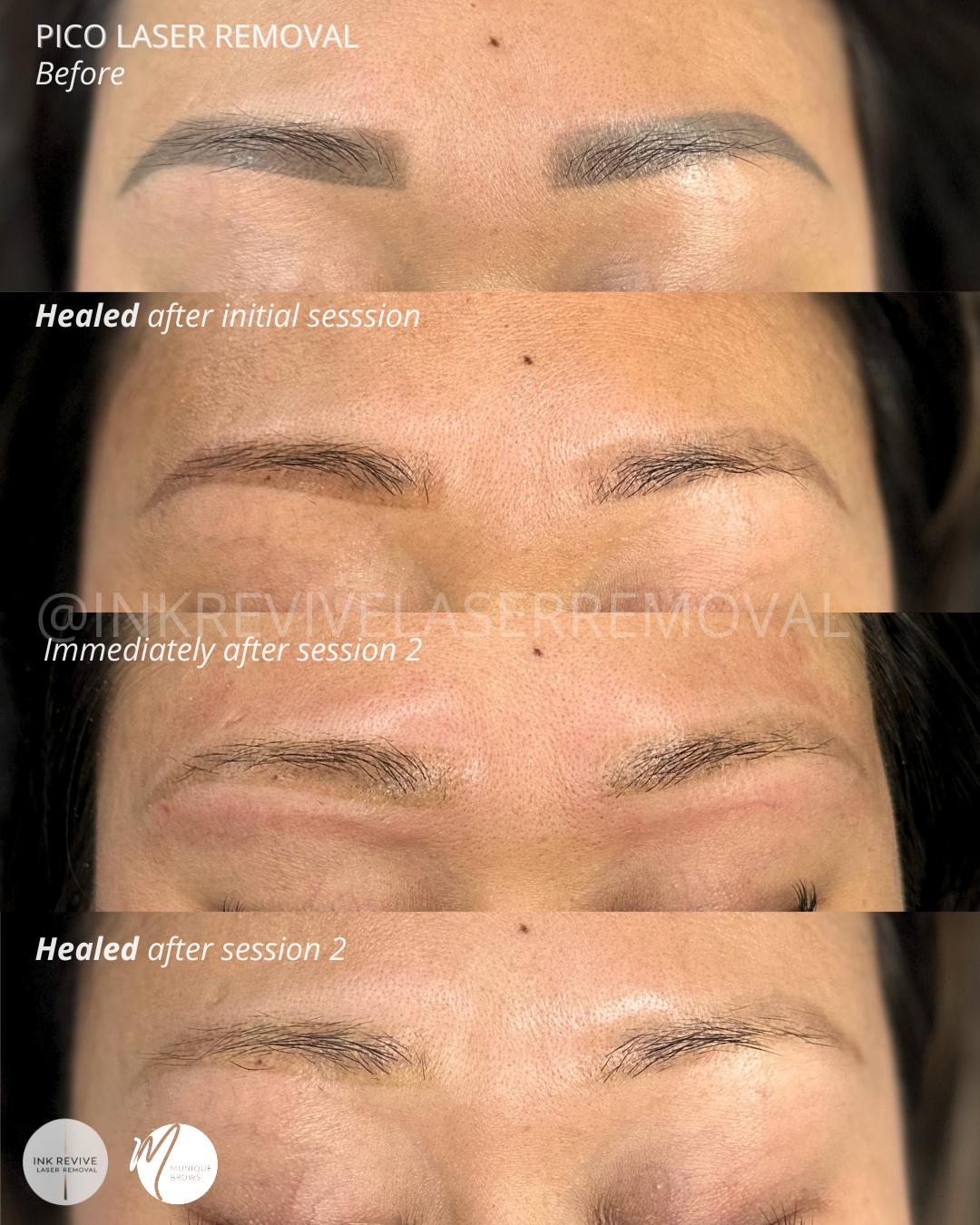
Pico laser technology uses ultra-short picosecond pulses of energy to shatter ink particles into microscopic dust, which your body’s lymphatic system then naturally flushes away. It is gentler on the skin barrier and far more effective at targeting stubborn pigments than older laser models.
You should opt for Pico laser removal before getting a new set of brows if:
Pigment saturation is high (less than 80% faded): The color is still dark, dense, or solid.
You want a thinner or completely different shape: A cover-up can only make brows larger or darker. If your old brows are too thick, too low, or boxy, laser removal is the only way to shrink the canvas back down.
The old color is heavily discolored: Deep blue, grey, or dark purple hues require shattering before a fresh, natural brown can be implanted.
You want light, fluffy Nano Hairstrokes: Crisp, individual nano strokes require a clean canvas. Tattooing delicate hairstrokes over dark old pigment just makes them disappear.
The Assessment Process
If you aren't sure where your brows fall on the fading scale, don't guess. The best first step is always an in-person or photo consultation. An experienced PMU artist will evaluate the saturation, skin depth, color undertones, and structural integrity of your skin to give you an honest recommendation.
Investing in a few Pico laser sessions to lift old pigment may take a little extra patience, but starting with a clean canvas ensures your new brows heal soft, symmetrical, and beautiful for years to come.
