Rescuing Uneven Brows: A Case Study in Laser Correction and Color Neutralization
When a client walks into the studio asking for a "simple touch-up," they are often surprised to learn that brow corrective work is one of the most complex disciplines in the permanent makeup (PMU) industry.
Recently, I saw a client whose case perfectly illustrates why "fixing" someone else's work requires a blend of science, art, and high-end technology.
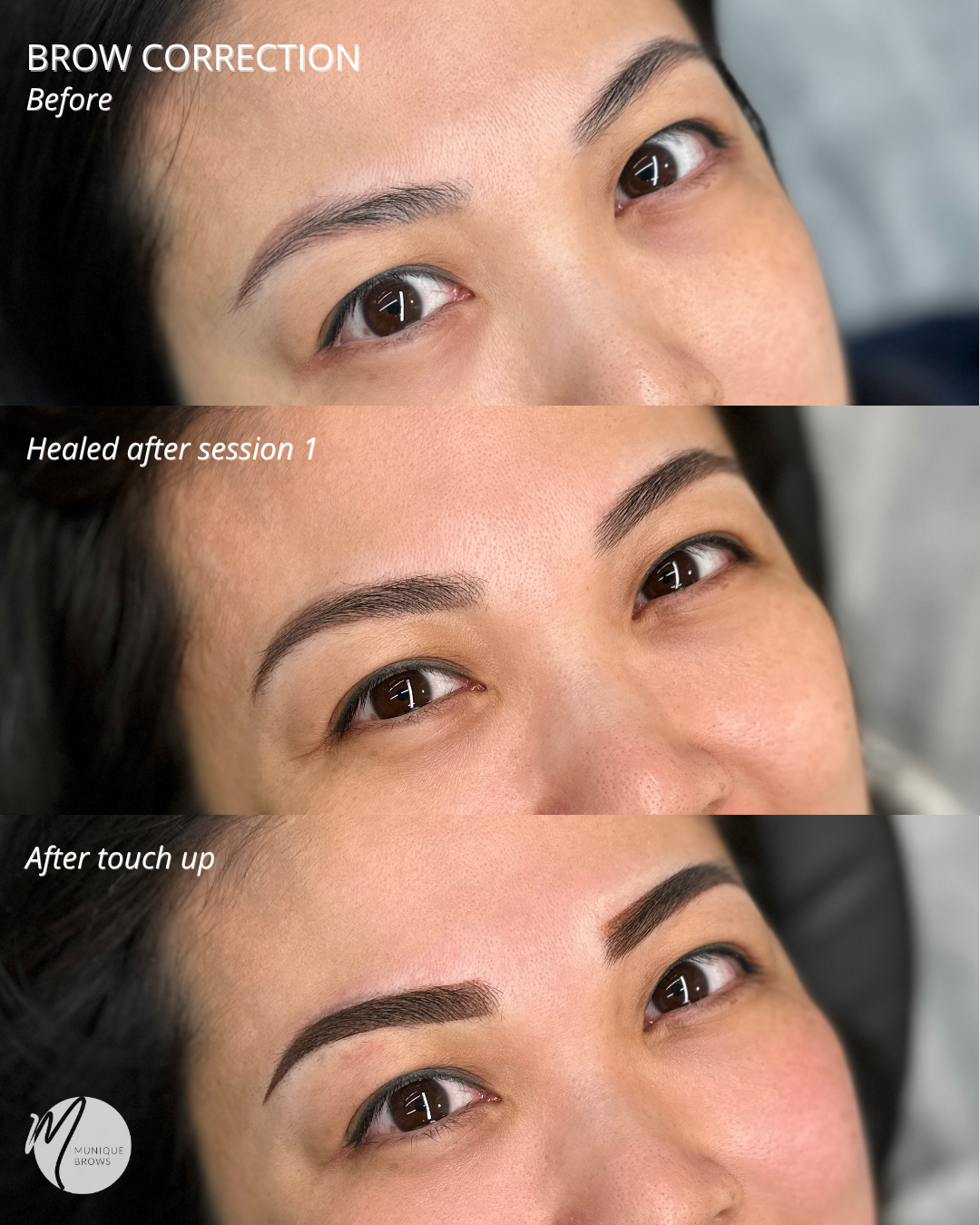
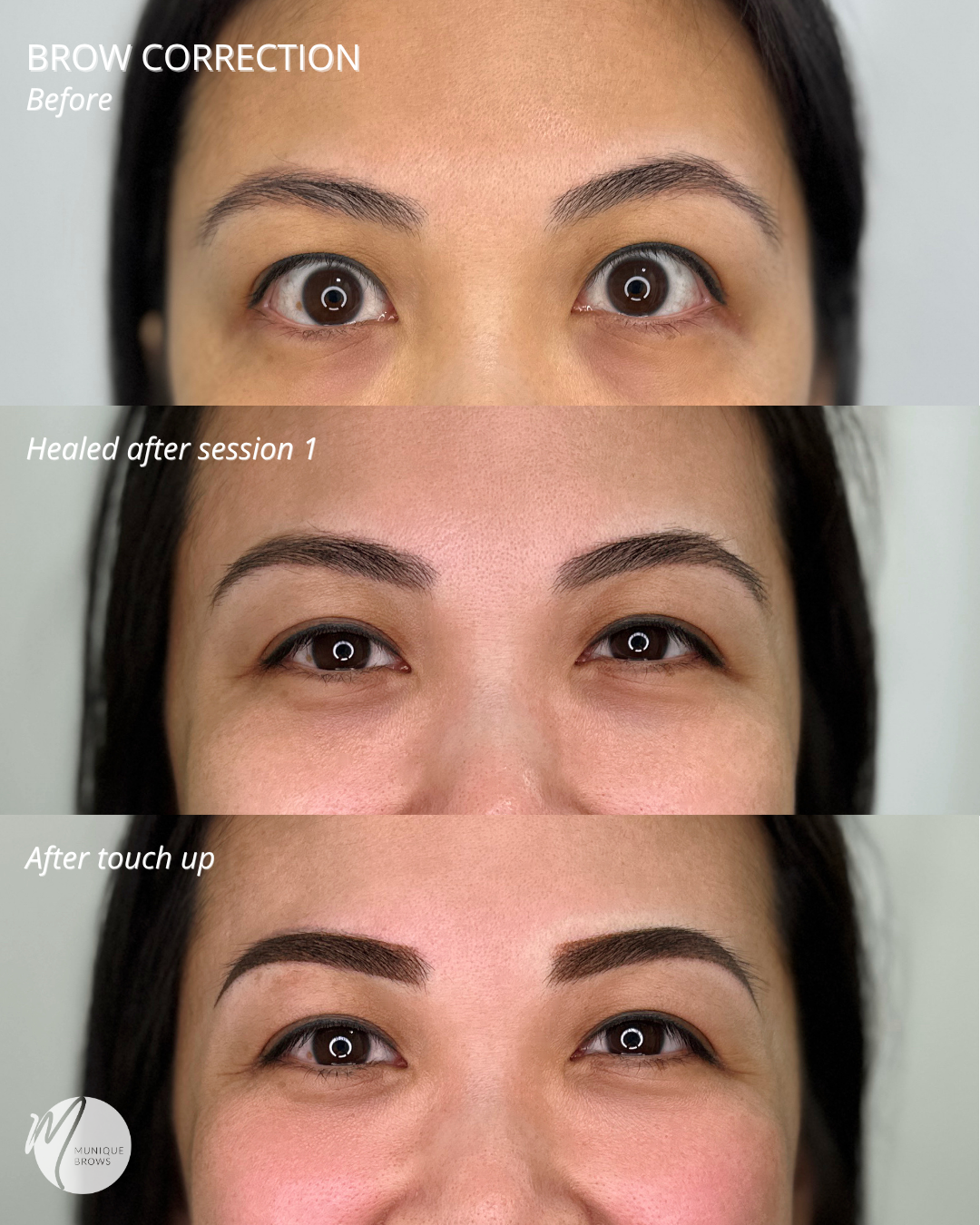
The Challenge: Red Fading and "Sister" Brows (That Weren't Sisters)
The client arrived with two primary concerns:
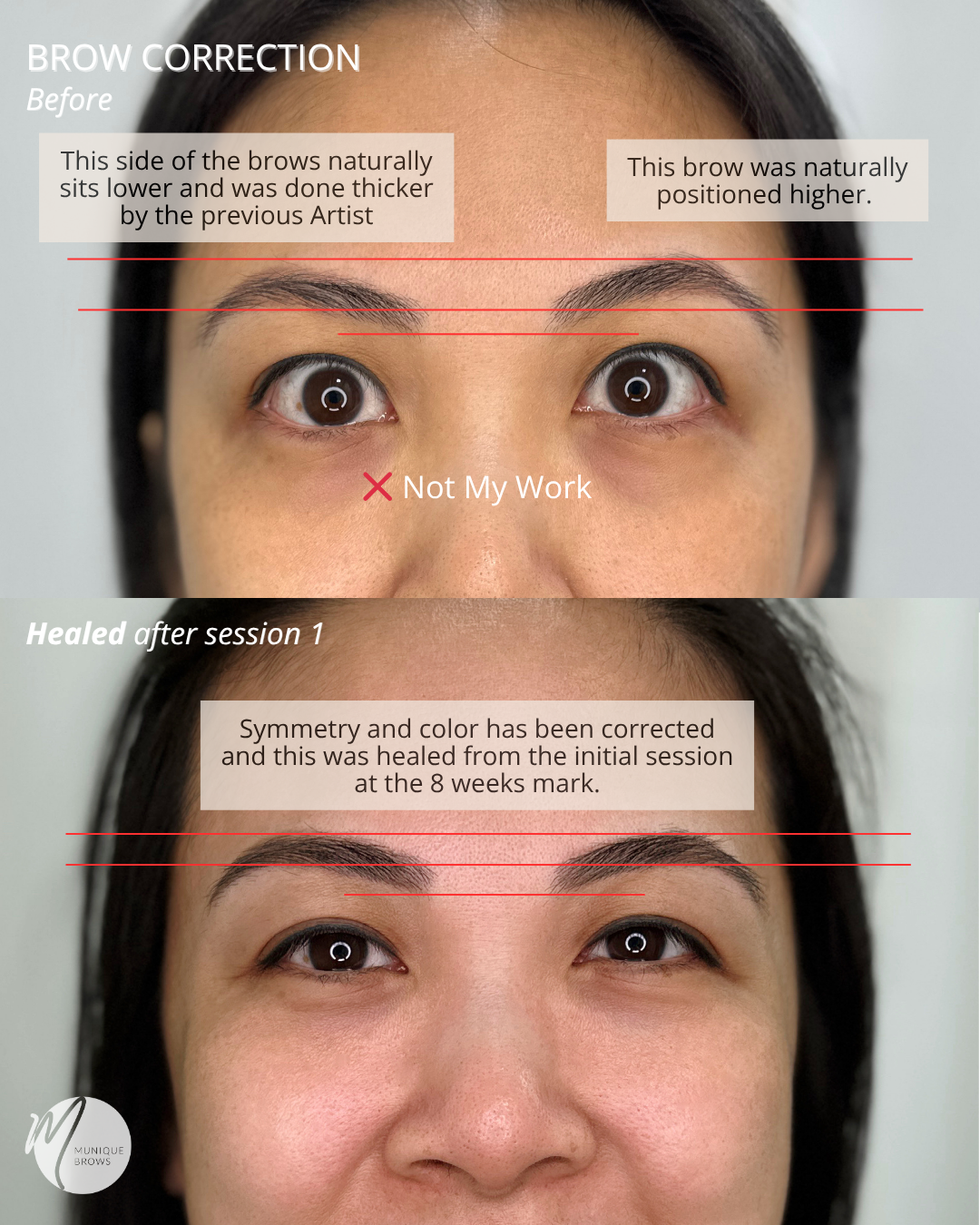
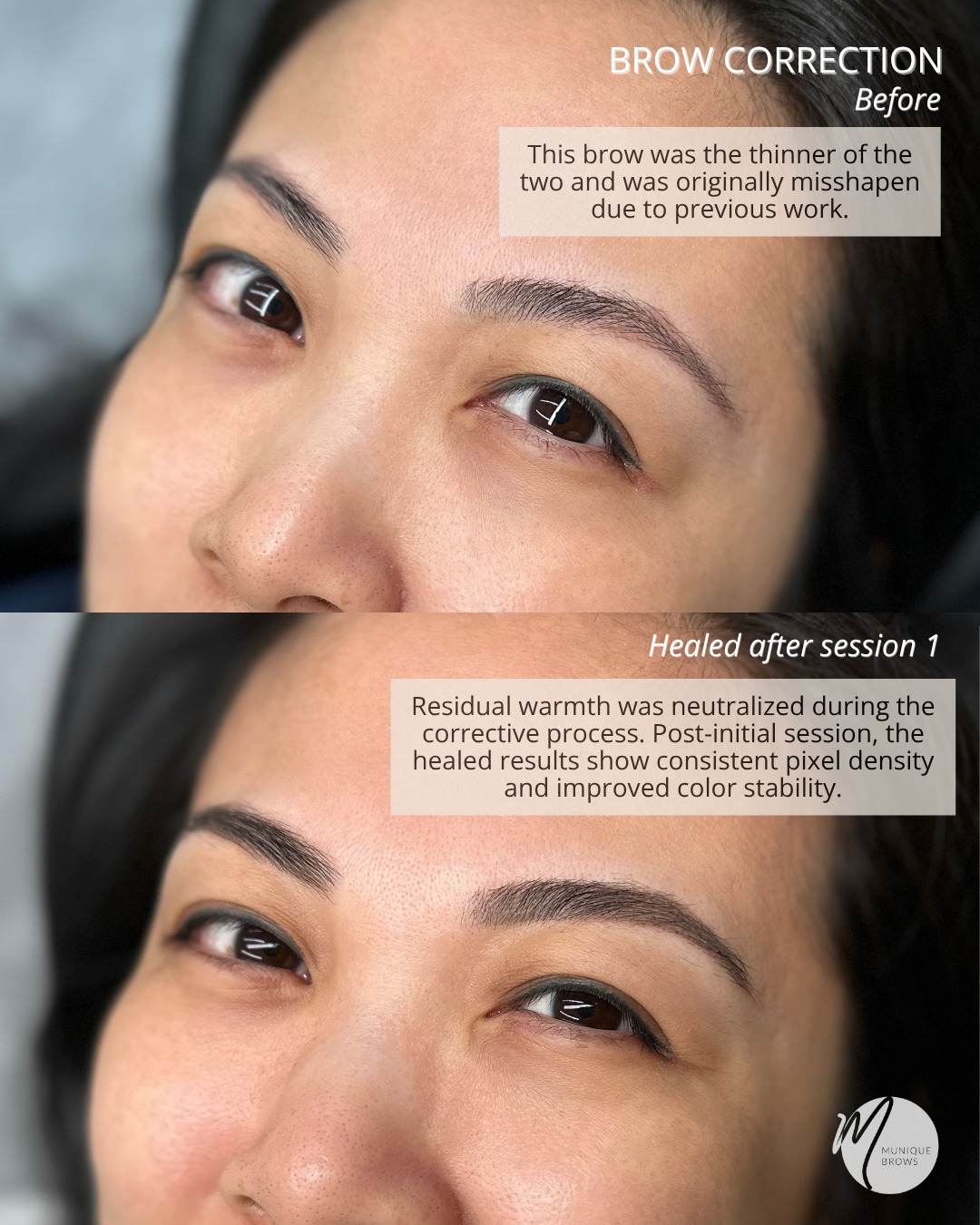
The dreaded red fade: Her previous pigment had oxidized, leaving behind a sunset-orange/red hue rather than a natural brown.
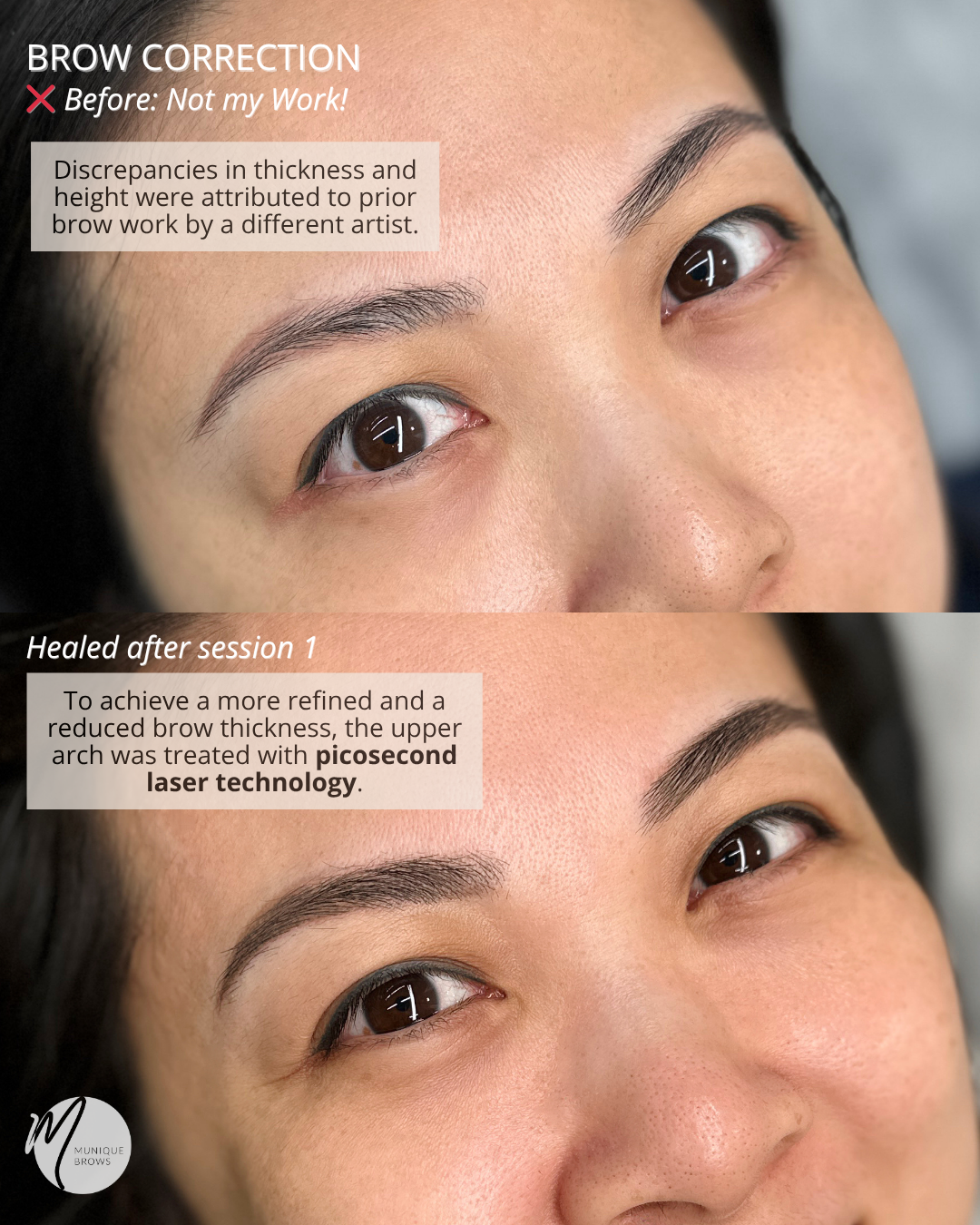
Major Asymmetry: One brow was significantly thicker and sat lower than the other. In the world of PMU, we say brows are "sisters, not twins," but these were more like distant cousins.
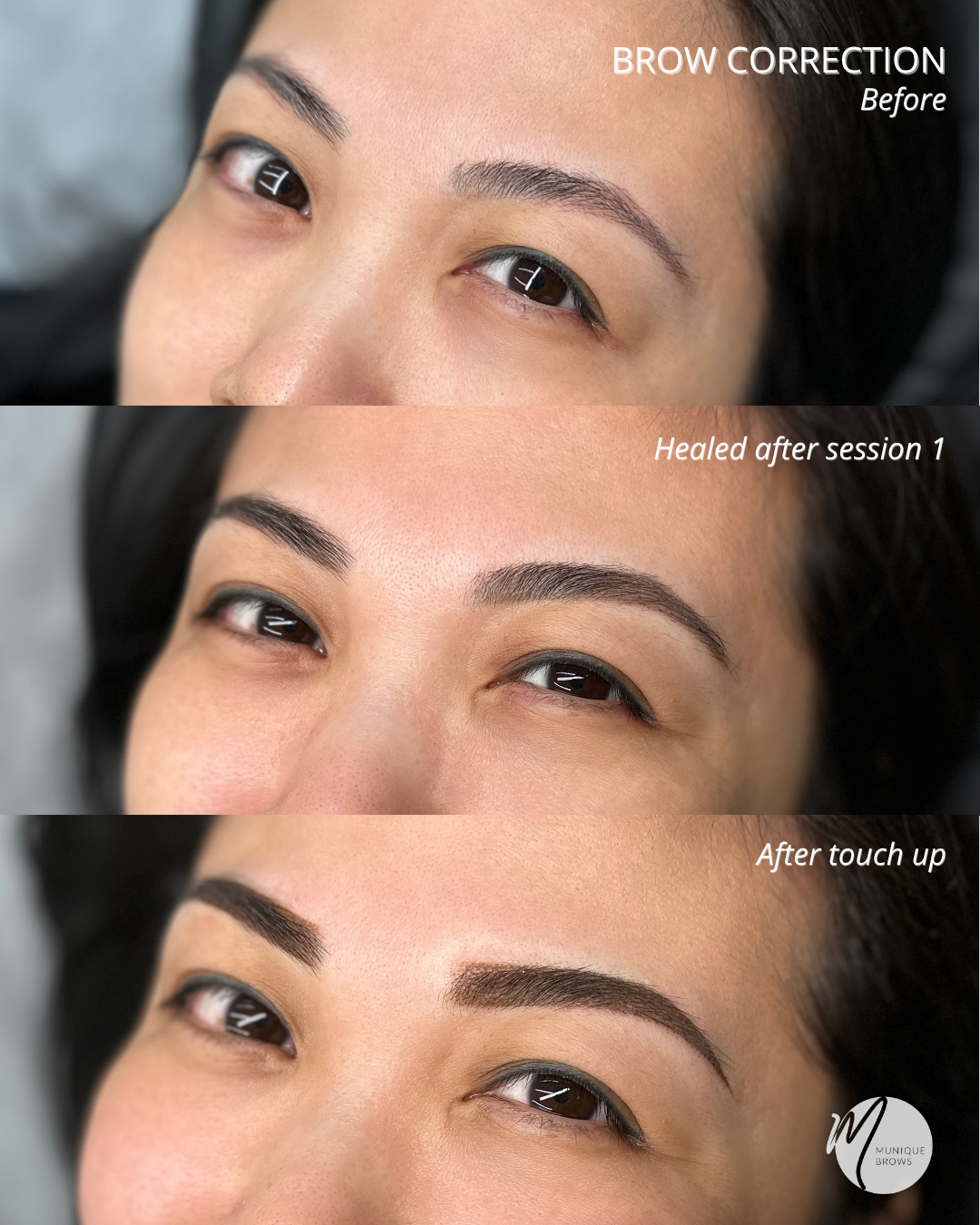
If we had simply tattooed over these brows with a darker pigment, the result would have been bulky, overly dark, and the red undertones would eventually bleed through the new color. To get a high-end result, we had to go backward before we could go forward.
The Solution: Partial Pico Laser Removal
This wasn't a case for a full "wipe the slate clean" removal. Instead, we used Precision Pico Laser technology to perform a partial removal.
Why Pico Laser?
Pico lasers deliver energy in ultra-short bursts (picoseconds). This shatters the pigment particles without damaging the surrounding skin or hair follicles.
Shrinking the Thickness: We targeted only the excess width on the thicker brow, "lifting" off the over-extended pigment to match the slimmer side.
Targeting the Red: Different laser wavelengths are used to target specific colors. By focusing on the red/orange spectrum, we were able to lift that warm hue, creating a neutral canvas.
Why Correction is "Advanced" PMU
Many clients assume you can just "color over" bad work. In reality, corrective work is an intricate process for several reasons:
Skin Integrity: We have to assess the scar tissue left by the previous artist.
Color Theory: Neutralizing red requires a deep understanding of complementary colors (usually involving green or olive-based modifiers/corrector) to ensure the final result doesn't heal gray or muddy.
Patience: Laser removal requires healing time (usually 6–8 weeks) before we can even think about adding new pigment.
The Lesson: It is much easier to create a beautiful brow on a blank canvas than it is to renovate a house with a shaky foundation.
Thinking About a Correction?
If you have old permanent makeup that has turned red, blue, or looks uneven, don't just "top it up." Adding more pigment to a bad shape only makes the problem heavier.
Corrective work is an investment in your face. By using tools like the Pico laser to refine the shape first, we ensure that your new brows look intentional, symmetrical, and—most importantly—natural.
Ready to start your brow transformation? Contact us for a consultation to see if you’re a candidate for laser refinement or color neutralization.