
When "Fixing" It Makes It Worse: The Truth About Muddy Microblading
We’ve all seen the stunning "before and afters" of expert microblading—crisp hair strokes, perfect symmetry, and effortless confidence. But behind the scenes, there is a rising trend that many artists are hesitant to talk about: The danger of trying to "tattoo over" bad work.
If you’ve had a less-than-ideal experience elsewhere, your first instinct might be to find a new artist to simply "cover it up." However, in the world of permanent makeup, adding more pigment to a problem usually only creates a bigger one.
The Trap of Pigment Saturation
The most common mistake in corrective work is the assumption that more ink will hide old mistakes. In reality, the skin has a limited capacity for how much pigment it can hold.
When you layer new strokes over improperly placed or faded pigment, you aren't masking the old work—you’re creating pigment saturation. Instead of clear, defined hair strokes, the colors bleed together under the skin. This is how you end up with "muddy brows": a heavy, solid block of color that looks like a permanent marker rather than natural hair.
Why You Can’t Just "Color Correct" a Bad Shape
If your original microblading was placed too deep or has shifted to an unnatural hue (like blue-grey or sunset orange), adding a "corrector" shade on top is often a temporary fix. As the skin heals and ages, those underlying muddy tones will eventually rise back to the surface, leaving you with a muddled, multi-colored mess.
The Professional Rule of Thumb: If the canvas is already full, you cannot paint a new masterpiece. You have to clear the canvas first.
A Journey to Restoration: From Muddy to Managed
The photo collage below tells a vital story. This client came in with microblading done elsewhere that had lost its definition and shifted in tone.
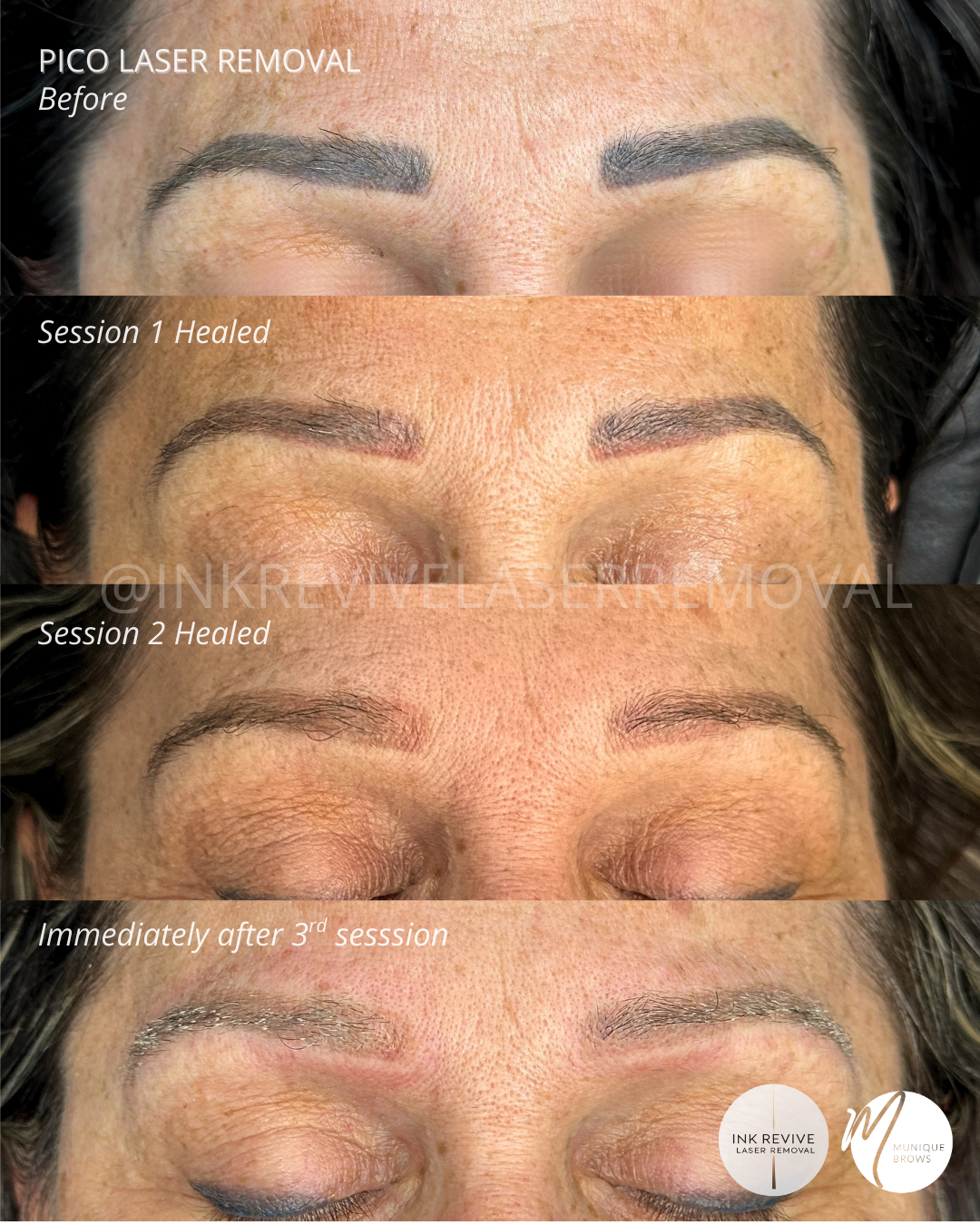
Initial Sessions: You can see the struggle of the skin attempting to hold onto more pigment. Despite attempts at correction, the brows remained dense and lacked the "fluff" and realism we all crave.
The Turning Point: Instead of pushing more ink into already stressed tissue, we transitioned to Pico Laser Removal.
The Result (Immediately after 3rd Pico Session): Look at the clarity returning to the skin. By shattering the old, "muddy" pigment molecules, the laser allows the skin to finally breathe and clear the slate.
Your Best Result Starts with a Clean Slate
If your brows feel heavy, blurry, or "off-color," the answer isn't another microblading appointment—it’s patience and proper removal. Starting fresh with a Pico laser ensures that when you do decide to get your brows done again, the results will be crisp, clean, and beautiful for years to come.
Ready to Reclaim Your Brows?
Don't settle for muddy results or a "quick fix" that only masks the problem. Whether you need a professional assessment of your current microblading or you're ready to start your removal journey, I am here to help you achieve the clean, natural look you deserve.
Click into Contact Us today to discuss your customized removal and correction plan. Let's get your confidence back!
