
Why Do Brow Hairs Turn White After Pico Laser Removal? The Science Behind It (and Why It’s Temporary)
Pico laser technology has become one of the most advanced and effective methods for removing old or saturated brow tattoos. In many cases, a single session can lift up to 90% of unwanted pigment, leaving the brows dramatically lighter and creating a much cleaner canvas for future work.
Clients are often amazed when they see their before-and-after photos, showing how efficiently pico laser breaks down stubborn ink—especially pigments that traditional removal methods struggle to lift.
However, along with this incredible effectiveness, some clients notice one common side effect:
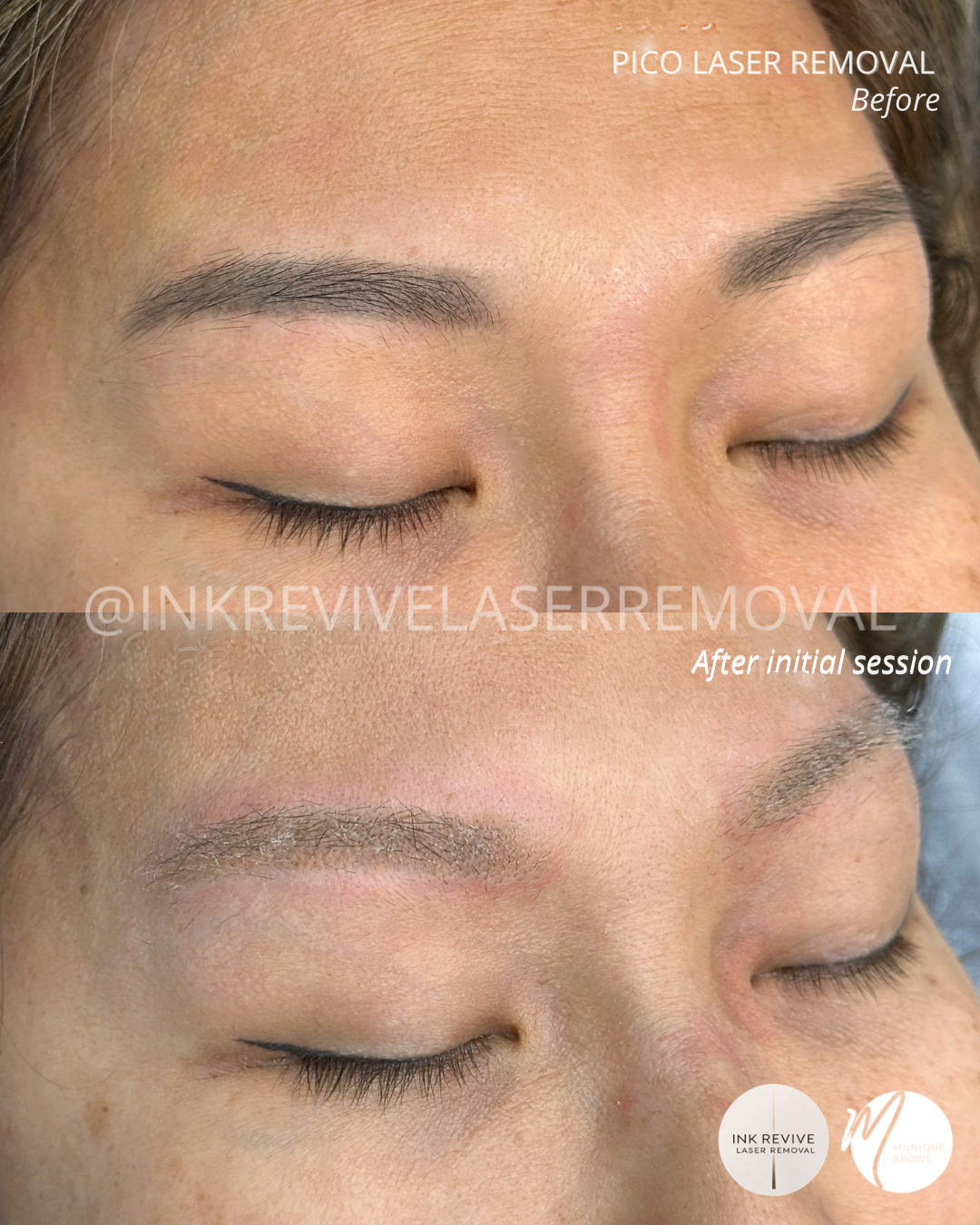
👉 Their brow hairs appear white, silvery, or very light immediately after the session.
This is completely normal, expected, and temporary. Below, we explain exactly why this happens and the science behind it.
How Pico Laser Works Beneath the Skin
Pico laser devices deliver ultra-short bursts of energy measured in picoseconds, which shatter tattoo pigment into microscopic particles. Your body then naturally flushes these particles away over the weeks following the session.
Because the laser specifically targets pigment, it works exceptionally well on:
Dark/saturated brow tattoos
Old permanent makeup that won’t budge with saline
Deeply implanted pigment
Cool or ashy tones
This is why clients can see up to 90% lightening in just one treatment, depending on the pigment density and skin type.
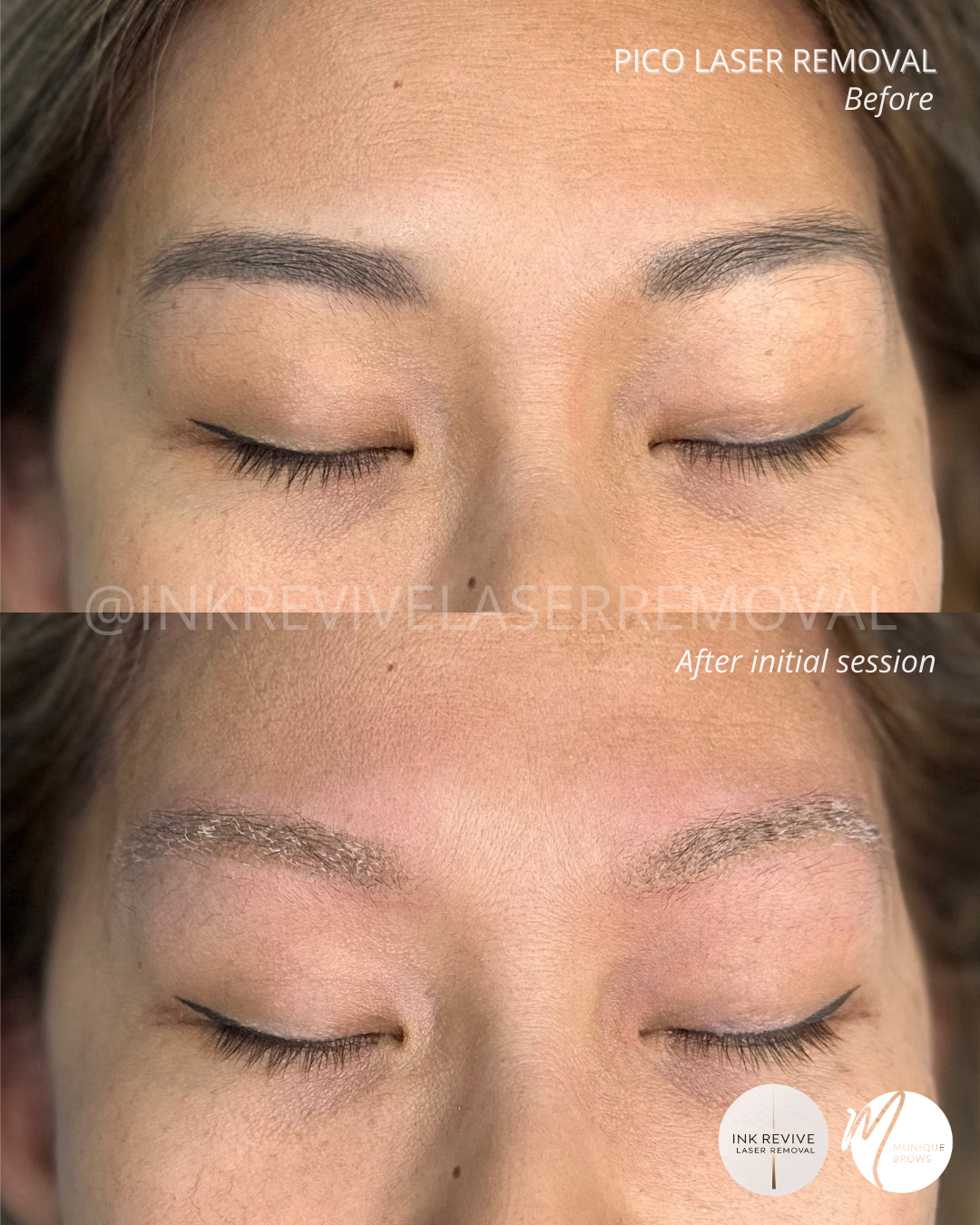
After 1 pico laser session. History: Client only had 2 sessions of power shading done.
Why Brow Hairs Turn White After Pico Laser: The Science
1. Melanin in the Hair Is Temporarily Affected
Brow hairs—like skin and tattoo ink—contain melanin, the pigment that gives them colour.
Since pico laser energy is highly attracted to pigment, it can also break down or disperse melanin inside the hair shaft, creating a bleached or frosty appearance.
2. Light Reflects Differently After Pigment Breaks Down
Once the pigment is disrupted, the hair becomes more translucent.
This makes light reflect off the hair differently, causing it to look:
White
Blonde
Silvery
Grey
This is purely a visual effect, not structural damage.
3. The Hair Follicle Is Not Harmed
Most importantly:
✔ The follicle stays healthy
✔ Hair growth continues normally
✔ The change is not permanent
Pico laser targets pigment—not the root—so there's no long-term impact on brow thickness, texture, or growth.
How Long Does the Whitening Last?
Most clients see their brow hairs return to their natural colour within:
3–6 weeks, as the melanin restores itself
Or even faster, as new hair growth replaces the lightened hairs
A brow temporary tint can also restore colour instantly—usually safe 2 weeks post-treatment.
Is This Side Effect Common?
It’s normal and harmless, especially when:
The brow hairs are naturally dark
The laser uses a higher setting due to heavy saturation
The tattoo pigment contains carbon or cool tones
The treated area has a dense concentration of ink
Even when whitening occurs, it fades seamlessly.
Why You Shouldn’t Be Concerned
This whitening is actually a sign that:
✨ The laser effectively interacted with pigment
✨ The session successfully lifted a significant amount of ink
✨ Your removal process is progressing beautifully
The brows simply need time—and sometimes a quick tint—to look completely normal again.
Final Thoughts
Pico laser removal is one of the fastest and most efficient solutions for clearing old or saturated brow tattoos. With the ability to lift up to 90% of pigment in a single session, clients can expect incredible results supported by dramatic before-and-after visuals.
If you notice your brow hairs turning white afterward, don’t worry—it’s a temporary and expected part of the process. Your natural colour will return, and you’re well on your way to fresh, clean brows ready for correction or new shading.
If you’d like to book a consultation or need guidance on whether your brows are ready for laser removal or correction, feel free to reach out anytime.
