
If you have old cosmetic brows that have faded into a cold blue or dark ash-gray tone, you might be considering laser removal to restore your natural look. But when starting your laser eyebrow tattoo removal journey, one common question often arises: Why do two people with identical-looking blue brows experience vastly different clearance rates after the exact same laser session?
The answer goes far deeper than pigment color alone. It comes down to what is hiding beneath the surface of your skin.
What’s Hiding Underneath the Skin?
When microbladed or tattooed brows shift to a blueish hue over time, the main barrier standing between you and full laser clearance is often hidden microblading scar tissue.
To understand why laser removal results vary, it helps to look at the underlying skin biology and history of permanent makeup techniques.
1. Depth & Artist Pressure
Microblading relies on manual incisions into the skin using a small blade. Over a decade ago, microblading was the primary technique taught to artists and many beginner Artists naturally have the perception that "cutting deeper equals longer-lasting pigment."
In reality, placing pigment too deep breaches the dermal layer and triggers a permanent healing response, leaving behind microscopic collagen scarring beneath the ink.
2. Skin Type & The Oily Skin Factor
Skin condition, thickness, and oil production play massive roles in how manual cuts heal:
Oily Skin Types: Clients with oily or thicker skin often experience a more intense inflammatory response to deep manual cuts.
Fibrotic Tissue: As the body heals these deeper micro-cuts, it lays down dense, fibrotic scar tissue to repair the dermal layer.
Pigment Shift: Over time, ink trapped deep within this scarred dermal matrix shifts color, reflecting blue or cool undertones due to light passing through layers of skin and scar tissue.
3. The Laser Trap: How Scar Tissue Blocks Light Energy
Laser removal works by emitting targeted light energy that passes through the skin to shatter encapsulated pigment particles into tiny fragments, which your body's lymphatic system then naturally flushes away.
When sub-surface scar tissue is present, it acts as a physical shield:
Energy Scattering: Dense, thick collagen bundles in scar tissue reflect and scatter the laser’s light energy before it can fully reach the pigment.
Trapped Ink: Pigment particles become tightly webbed inside fibrotic collagen walls, requiring multiple passes over time to break down layer by layer.
Trusting the Removal Process: Why Patience Is Key
Understanding your skin’s unique history makes it easier to navigate the laser removal journey. Laser brow removal is not simply erasing ink—it is working through your skin's unique healing history.
Minimal Scarring: Light energy reaches the pigment easily, resulting in high initial clearance (up to 80%).
Dense Scar Tissue: Light energy is scattered by fibrotic fibers, leading to a more gradual initial clearance (around 40%).
Deeper Ink Depth: Requires progressive sessions to fragment layers, showing incremental fading per treatment.
If your clearance rate seems slower than someone else's, it doesn't mean the laser isn't working. It simply means your skin needs extra time to gently break down the sub-surface scar tissue while your lymphatic system clears the broken-down ink particles.
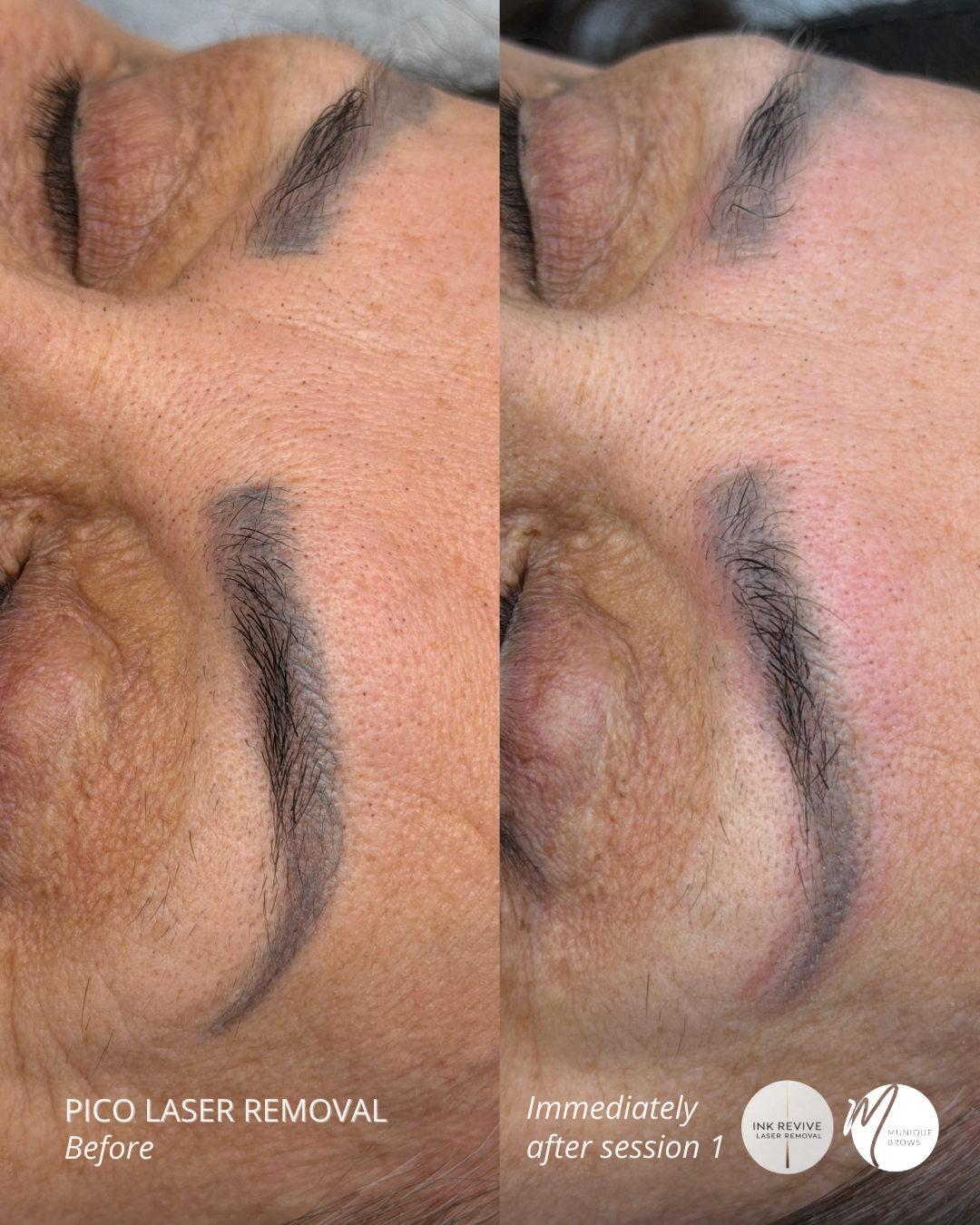
This is a great example of a client who had Microblading done 5+ years ago. Brows show visible signs of scar tissues as a result of the previous Microblading work.
What Should You Do Next?
If you are ready to address faded blue brows, book a professional consultation at Munique Brows Studio. A qualified Brow Correction / Laser Removal specialist will assess your skin texture, estimate pigment depth, and create a customized removal plan tailored specifically to your skin's needs.
